Code: 10122
Dimensions:
THÉODORE GÉRICAULT Paris 1791 – 1814 Paris
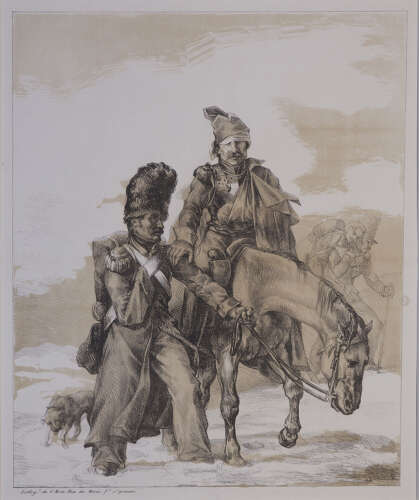
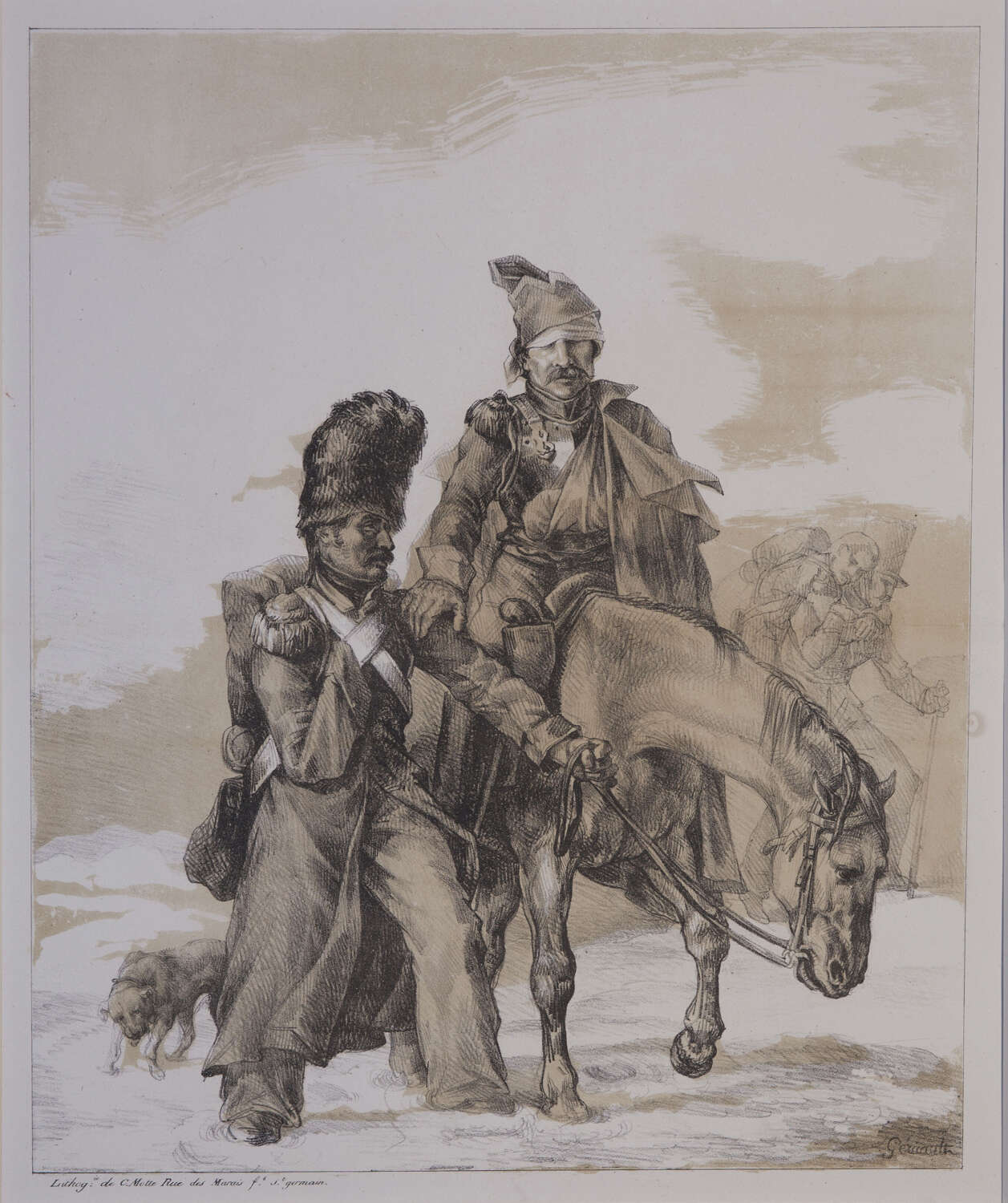
Retour de Russie (The Return from Russia).
Lithograph; 1818. Delteil 13: i/II. Catalogue of the exhibition Géricault at the Grand Palais, Paris, 1991-1992, 66: iii/VI. Catalogue of the exhibition Géricault at the Ecole des Beaux-Arts, Paris, 1997-1998, E. 10. A very fine impression, with the tint-stone, on wove paper, of the third state of six, before the title and removal of the address, but with the edges of the clouds somewhat softened. Printed by Charles Motte. A central, horizontal fold visible chiefly verso and two small light stains in the margins, otherwise in fine condition.
Géricault’s lithograph is arguably the greatest example of the medium in the Romantic period and his masterpiece in printmaking. The Retour de Russie shows the suffering and camaraderie of Napoleon’s troops on their harrowing return from the aborted invasion of Russia. After the Russians set fire to Moscow in 1812, the French army was forced to retreat in savage winter conditions. Géricault defined the Retour de Russie in terms more universal than military. The two soldiers in tattered clothing, wounded and bandaged, struggle toward us with grim determination and comradeship as they support each other. The power of this remarkable lithograph cannot be better expressed than by the comment of Régis Michel cited by Emmanuelle Brugerolles in the Ecole des Beaux-Arts Géricault catalogue:
… ni Callot ni Goya n’ont mieux peint l’absurde barbarie de la chose militaire… Les troupiers moribonde de cet hopîtal ambulant s’égalent, dans panoplies infirmières, aux héros mythiques – héros maudits – de l’antiquité, que frappent l’exil ou la cécité : Laocoon, Œdipe, Belisarius. [neither Callot nor Goya better describe the absurd barbarity of the military … the wounded troopers of this ambulatory hospital have their counterparts in the mythic, cursed heroes of Antiquity, exiled and blinded : Laocoon, Oedipus, Belisarius].
445 x 362 mm 17 ½ x 14 ¼ inches
Note: Géricault, Ecole Nationale Superieure des Beaux-Arts, ex. cat. E. 10. p. 222. Emmanuelle Brugerolles, here citing Régis Michel, 1992, coll. Découvertes Gallimard.